
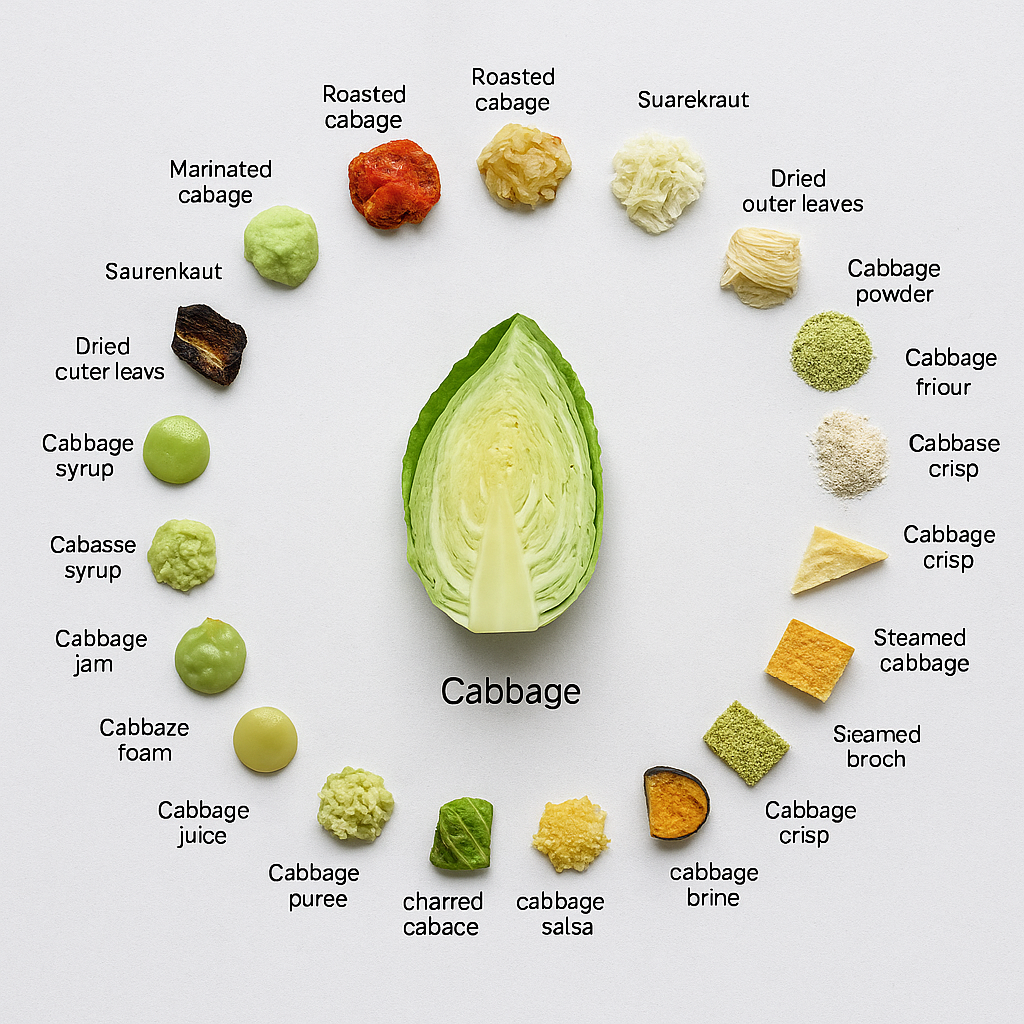
Zero-Waste Kitchen: Reimagining Cabbage from Leaf to Syrup
In today’s eco-conscious world, our kitchens can be the frontline of sustainability. Cabbage isn’t just a side salad—every leaf, stalk, and shred can become a culinary wonder. From tangy ferments to sweet syrups, this humble vegetable unlocks endless zero-waste recipes that nourish both body and planet.
Why Cabbage Is Your Zero-Waste Superstar
- Every part is usable: raw leaves, cores, outer layers, even the tougher ribs.
- Nutrient-dense: rich in vitamins C and K, fiber, and antioxidants.
- Texture chameleon: goes from crunchy crisps to silky purées and frothy foams.
- Long-lasting: stores well in the fridge, then transforms into shelf-stable staples.
19 Cabbage Preparations to Stretch Your Harvest
- Fresh Cabbage – shredded, chopped, or whole for salads and slaws.
- Marinated Cabbage – quick-pickled for bowls, tacos, and sandwiches.
- Roasted Cabbage – caramelized wedges with smoky, sweet depth.
- Steamed Cabbage – tender bites for weeknight sides or stir-fries.
- Sauerkraut – gut-friendly fermented shreds ideal for hot dogs and grain bowls.
- Cabbage Broth – Simmer stalks and cores for a nutrient-rich stock.
- Cabbage Brine – Use leftover pickle liquid to jumpstart new ferments.
- Charred Cabbage – grill or sear for a dramatic, bitter-sweet crunch.
- Cabbage Salsa – bright, zesty topping for seafood, meats, or eggs.
- Cabbage Purée – creamy base for soups, sauces, or vegan “mashed potatoes.”
- Cabbage Juice – fresh-pressed vitality shot blended with apple or ginger.
- Cabbage Foam – aerated topping for gourmet salads and cocktails.
- Cabbage Jam – savory-sweet spread for toast, crackers, or cheese boards.
- Cabbage Syrup – reduce juice into a glaze for roasted veggies or cocktails.
- Dried Outer Cabbage Leaves – dehydrate for tea infusions or broth flavoring.
- Dried Inner Cabbage Leaves – turn delicate pieces into chips or trail snacks.
- Cabbage Powder – pulverize dried leaves for smoothies, soups, or spice rubs.
- Cabbage Flour – grind cores into gluten-free flour for baking or breading.
- Cabbage Crisps – crisp baked or fried leaves for a crunchy, healthy snack.
How to Kickstart Your Cabbage Zero-Waste Journey
Start by washing and separating leaves, cores, and outer layers. Plan fresh slaws or sandwiches with tender shreds. Reserve tougher ribs for broths, brines, or fermenting. Dedicate a weekend session to dehydrating leaves and reducing juice into syrup. During the week, riff on quick-pickles, jams, and charred steaks to keep meals exciting.
Fermentation is your secret weapon: it extends shelf life, boosts probiotics, and creates bold flavors with minimal effort. Keep jars of sauerkraut, brine, and jams handy to layer into wraps, salads, and bowls.
SEO-Friendly Tips for Sharing Your Zero-Waste Kitchen Story
Incorporate these keywords naturally to boost visibility:
- zero-waste recipes
- sustainable cooking
- Cabbage cooking ideas
- vegetable upcycling
- home fermentation
- eco-friendly kitchen
Pair your post with hashtags like #ZeroWasteKitchen, #SustainableLiving, and #PlantBasedCooking on LinkedIn and Blogger to connect with fellow food innovators.
Final Thoughts: Let Cabbage Spark Your Creativity
Turning cabbage into a week’s worth of broths, brines, jams, syrups, and snacks isn’t just cooking—it’s a statement. It shows how small choices can ripple out to reduce waste, support health, and inspire community. Try three cabbage techniques this week, share your results online, and watch how each leaf becomes a conversation starter.
Because in a zero-waste kitchen, every layer counts.


No comments:
Post a Comment